
This website uses only technically necessary cookies. We do not use analytics, marketing or personalisation services. More in our privacy policy.
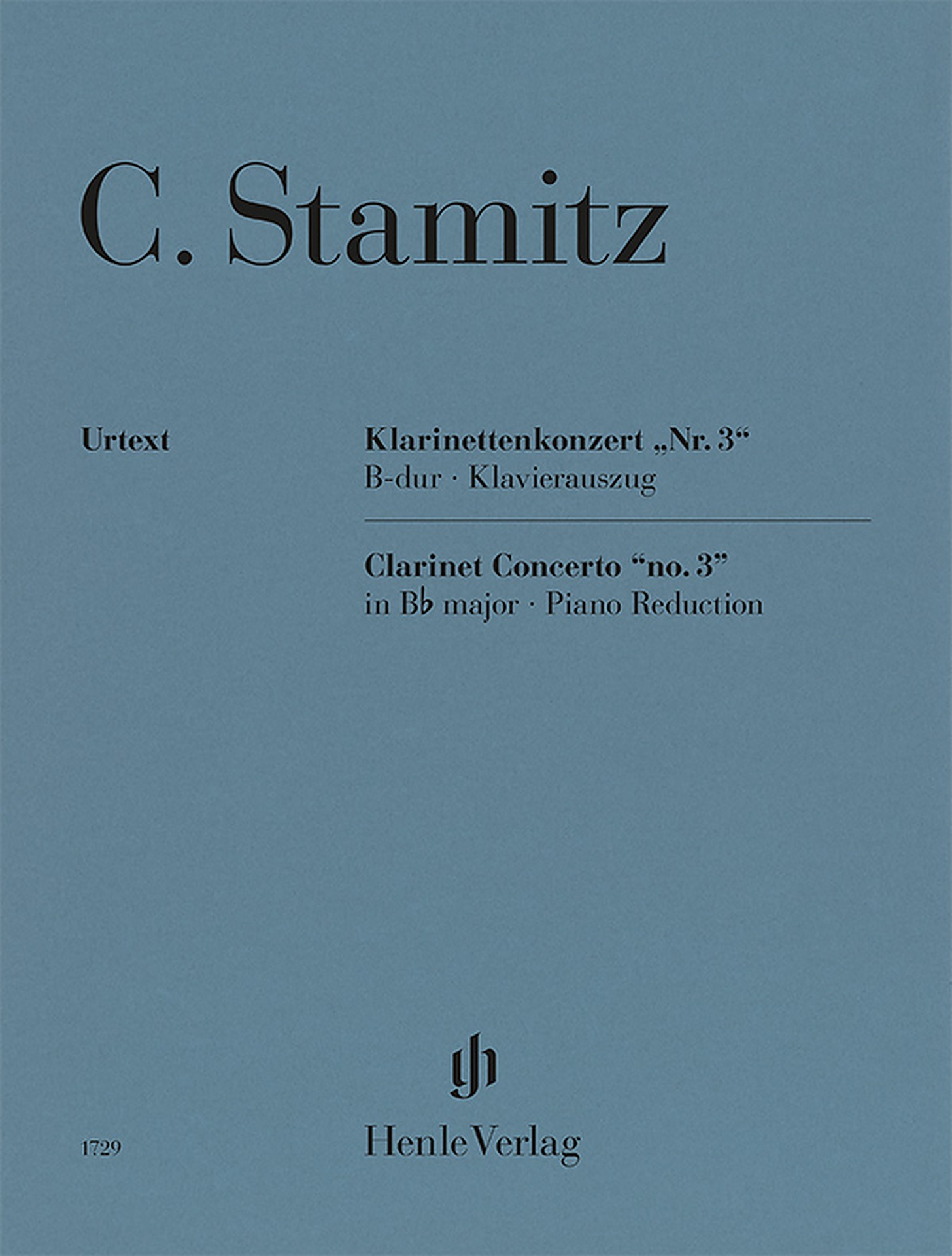

Carl Stamitz, one of the most prolific composers of the Mannheim School, was among the first to write a substantial body of solo works for the clarinet. Of his eleven surviving clarinet concertos, the B flat major concerto traditionally known as ‘No. 3’ is by far the best known; more recent catalogues list it as ‘No. 7’.
Appealing themes, figuration that lies well for the instrument and moderate technical demands have made it a standard teaching work worldwide, equally suited to auditions and as a ‘first’ solo concerto. Nicolai Pfeffer adds suggested cadenzas and lead-ins to the solo part, and Michail Lifits’s well-crafted piano reduction is within reach of non-professional pianists. The Urtext edition is in preparation.


