
This website uses only technically necessary cookies. We do not use analytics, marketing or personalisation services. More in our privacy policy.
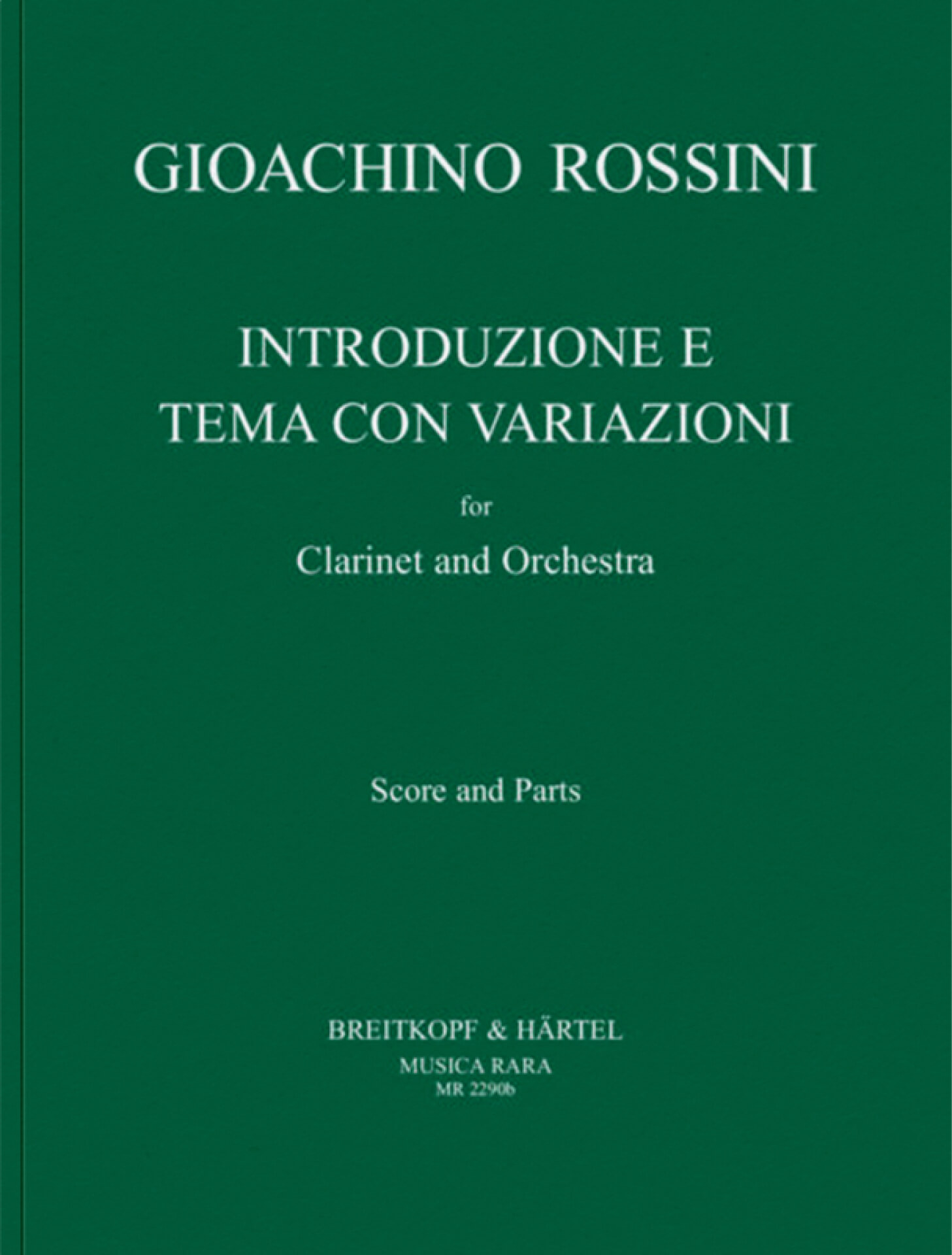

Introduction and Theme with Variations for clarinet and orchestra is now firmly established in the clarinet repertoire. The work was composed in Naples around 1819 and – like the earlier Andante e Tema con variazioni in C major – is dedicated to the clarinettist and student of Rossini, Alessandro Abate. Abate was a clarinet professor in Naples and also worked as principal clarinettist at the Teatro La Munizione in Messina from 1815 to 1816. Unfortunately, the exact date of the first performance and other circumstances related to the history of the composition can no longer be determined with certainty, but a letter from violinist Ferdinando Giorgetti to the composer, dated 29 March 1852, tells us that the variations were “composed with real modesty only for pleasure and to fulfil the wish of an old friend.”
The enduring popularity of the composition is perhaps also due to the fact that Rossini drew on two extremely popular opera themes from his Neapolitan period: the theme of the variations comes from the melodramma La donna del lago (Act I, cavatina “Oh quante lagrime”), while the theme of the introduction comes from the aria “La pace mia smarrita” in Act II of Mosè in Egitto. This composition in Italian bel canto style is striking for the refreshing alternation of the instrument’s lyrical qualities with the lightness and virtuosic joy of the performance. A surviving set of parts is now held by the Staatsbibliothek zu Berlin – Preußischer Kulturbesitz and comprises the printed parts for the orchestral instruments and the solo clarinet. This is the main source for this edition. A piano reduction also published by Breitkopf & Härtel under plate number 3978 has not survived.
This edition reproduces the musical text of the first edition according to current engraving conventions. Obvious printing errors, dynamics and patently missing phrasing have been tacitly corrected or added by the editor, as have some accidentals where appropriate. Some variation passages in the source parts were ambiguously notated. These passages have also been carefully corrected and an optimised and unambiguous repeat structure has been created.
The editor’s arrangement for clarinet and string orchestra is a further enrichment of this edition.


