
This website uses only technically necessary cookies. We do not use analytics, marketing or personalisation services. More in our privacy policy.

Iwan Müller (1786–1854), born in Riga to German parents, was one of the great clarinet virtuosos of his day and an instrument maker as well. In Paris he built an improved clarinet from 1812 onwards; at first rejected by the committee of the Conservatoire, it gained acceptance only years later and remains the basis of the so-called German system.
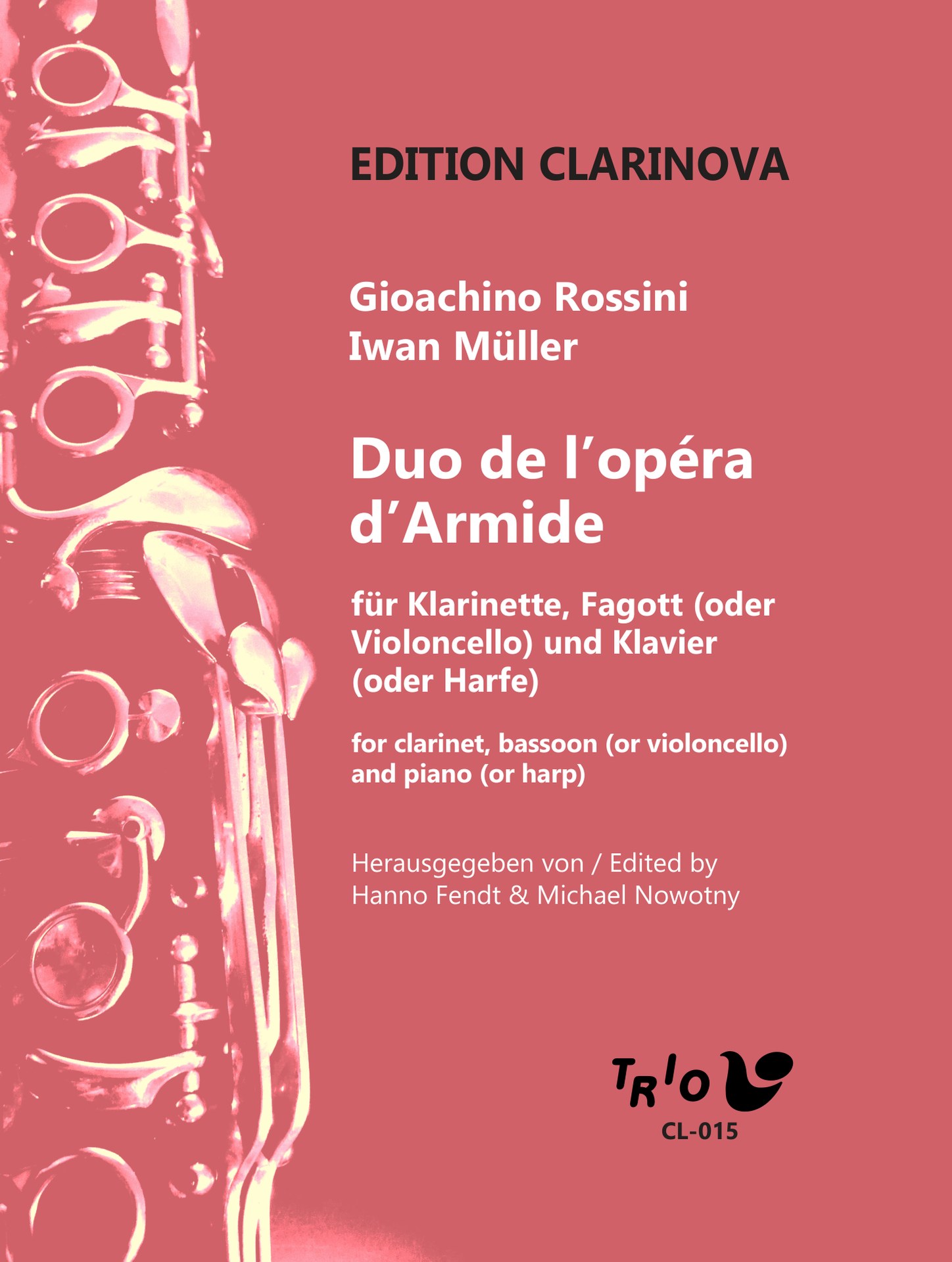
His Duo draws on melodies from Gioachino Rossini's opera Armida, first performed in Naples in November 1817 with Isabella Colbran in the title role. The bassoon part may also be played on the cello, the piano part on the harp.
The edition follows the three parts of the first Paris edition by Dufaut et Dubois, which, as was customary at the time, appeared without a score. Editorial additions and departures from the source are marked by brackets or footnotes. Preface (German/English) by Hanno Fendt and Michael Nowotny.


